


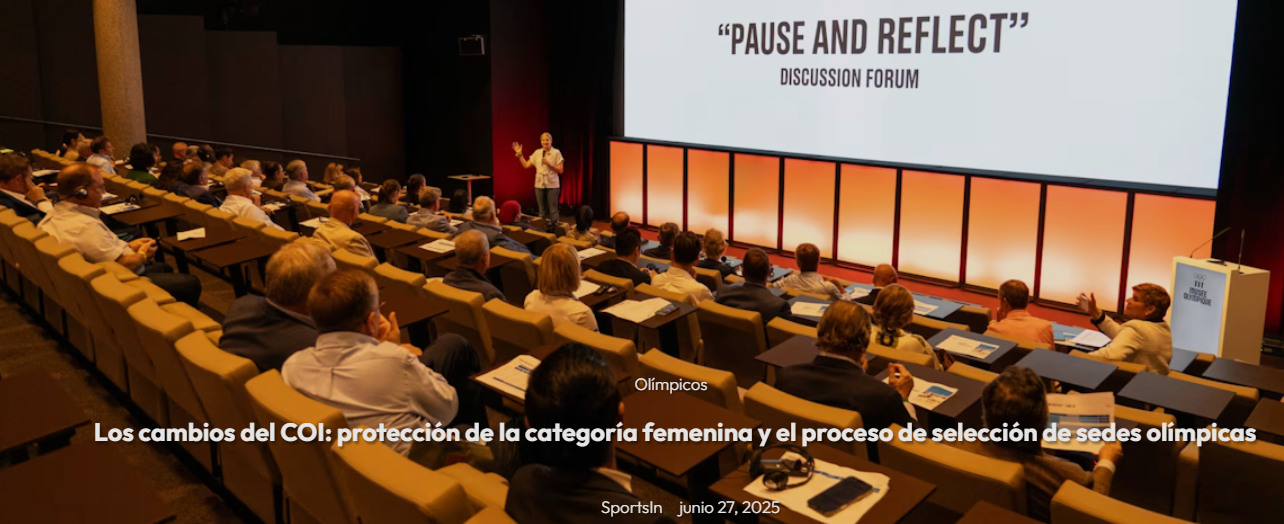
El Comité Olímpico Internacional -COI- ha dado un paso importante esta semana tras un taller denominado ‘Pause and Reflect’ celebrado en Lausana, Suiza. Durante el evento, la presidenta del COI, Kirsty Coventry, anunció la creación de dos grupos de trabajo que se centrarán en prioridades clave para el futuro del Movimiento Olímpico. Estas iniciativas buscan revisar el proceso de elección de futuras sedes de los Juegos Olímpicos y proteger la categoría femenina en el deporte.
Coventry destacó que la decisión de crear estos grupos responde a un consenso generalizado entre los miembros del COI. Según explicó, el objetivo es «garantizar que las decisiones estratégicas del organismo sean inclusivas y reflejen las necesidades actuales del deporte global».
Proceso de elección de sedes olímpicas
Uno de los grupos de trabajo se dedicará a analizar el proceso de selección de las futuras sedes de los Juegos Olímpicos de Verano e Invierno. La presidenta del COI subrayó que los miembros desean estar más involucrados en este procedimiento y que existe un debate significativo sobre el momento adecuado para adjudicar las sedes.
Coventry mencionó que se tomarán como referencia las experiencias de Los Ángeles 2028, Brisbane 2032 y los Alpes Franceses 2030. Mientras que las dos primeras sedes fueron asignadas con 11 años de antelación, los Alpes Franceses se eligieron solo seis años antes de los Juegos. Este análisis buscará determinar el equilibrio ideal entre planificación a largo plazo y flexibilidad.
Categoría femenina en el deporte
El segundo grupo de trabajo se centrará en la protección de la categoría femenina, un tema que también recibió un amplio respaldo por parte de los miembros del COI. Coventry explicó que este grupo estará compuesto por expertos y Federaciones Internacionales, con el objetivo de alcanzar un consenso entre todas las partes interesadas.
La presidenta destacó que, aunque las diferencias entre deportes son inevitables, el COI asumirá un papel de liderazgo para garantizar que la categoría femenina sea protegida de manera efectiva. Este esfuerzo busca reforzar la equidad y la inclusión en el deporte, adaptándose a las particularidades de cada disciplina.
Reflexión del Movimiento Olímpico
El taller ‘Pause and Reflect’ no solo sirvió para anunciar estas iniciativas, sino también para reflexionar sobre el estado actual del Movimiento Olímpico. Durante las sesiones, los miembros del COI abordaron cinco temas principales: los atletas, los Juegos Olímpicos, el Movimiento Olímpico, el impacto del deporte en un mundo mejor y la generación de ingresos y alcance global.
Coventry señaló que este proceso de revisión es esencial para identificar oportunidades y retos, y para definir cómo el COI puede adaptarse a un entorno deportivo en constante evolución. La presidenta destacó la importancia de involucrar a todos los actores relevantes en este análisis.
————————————————————————————————–
The International Olympic Committee (IOC) took an important step this week following a workshop entitled “Pause and Reflect” held in Lausanne, Switzerland. During the event, IOC President Kirsty Coventry announced the creation of two working groups that will focus on key priorities for the future of the Olympic Movement. These initiatives seek to review the process for selecting future Olympic Games venues and protect women’s sports.
Coventry stressed that the decision to create these groups reflects a broad consensus among IOC members. She explained that the goal is to “ensure that the organization’s strategic decisions are inclusive and reflect the current needs of global sport.”
Olympic venue selection process
One of the working groups will be dedicated to analyzing the selection process for future Summer and Winter Olympic Games venues. The IOC president stressed that members want to be more involved in this procedure and that there is significant debate about the appropriate timing for awarding venues.
Coventry mentioned that the experiences of Los Angeles 2028, Brisbane 2032, and the French Alps 2030 will be used as references. While the first two venues were assigned 11 years in advance, the French Alps were chosen only six years before the Games. This analysis will seek to determine the ideal balance between long-term planning and flexibility.
Women’s category in sport
The second working group will focus on the protection of the women’s category, an issue that also received broad support from IOC members. Coventry explained that this group will be composed of experts and International Federations, with the aim of reaching a consensus among all stakeholders.
The president stressed that, although differences between sports are inevitable, the IOC will take a leadership role in ensuring that women’s sports are effectively protected. This effort seeks to reinforce equity and inclusion in sport, adapting to the particularities of each discipline.
Reflection on the Olympic Movement
The ‘Pause and Reflect’ workshop not only served to announce these initiatives, but also to reflect on the current state of the Olympic Movement. During the sessions, IOC members addressed five main topics: athletes, the Olympic Games, the Olympic Movement, the impact of sport on a better world, and revenue generation and global reach.
Coventry pointed out that this review process is essential to identify opportunities and challenges and to define how the IOC can adapt to an ever-changing sports environment. The president stressed the importance of involving all relevant stakeholders in this analysis.